Revive and nature restoration
At Revive, we believe that urban development and nature do not have to be opposites. As cities continue to expand and pressure on biodiversity and quality of life increases, we deliberately choose sustainable urban development where green spaces take centre stage. We integrate high-quality green areas into our projects, implement natural water management systems, and protect existing green zones wherever possible. Additionally, we enhance biodiversity by using native plants and creating habitats for wildlife. An inspiring example is our urban forest at the Saffrou site in Oudenaarde, where nature and living go hand in hand, creating a future-proof, healthy environment for both people and wildlife.
one million litres of rainwater reused
Hectares of restored nature
Of the undeveloped area is car-free
renewable energy since 2019, six years ahead of legal requirements
From concrete to biodiversity
The sites Revive acquires often consist of large concrete areas and old buildings. Not exactly the ideal environment for plants and animals. That’s why we focus strongly on soil restoration. Since Revive was founded, we have redeveloped over 1,000,000 m² of old industrial sites, often restoring more than a quarter of the area. This not only has a positive impact on heat stress, flooding, and drought, but of course also on the biodiversity it enables, both above and below ground.
Biodiversity as a corporate culture
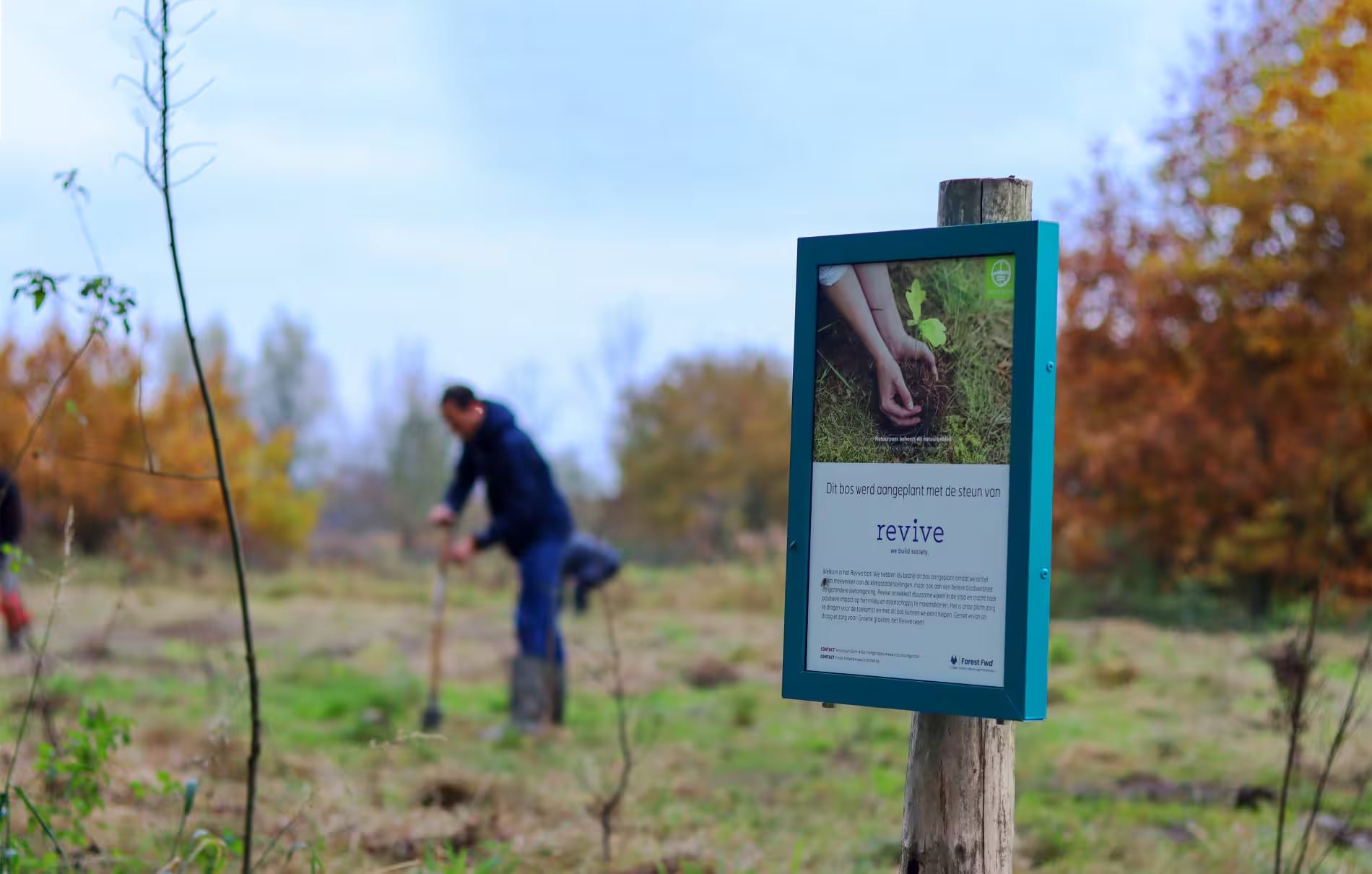
We don’t just consider biodiversity in our projects; as a company, we also do our part. For example, we have our own company forest. In November 2021, we planted 800 trees, gradually transforming an empty area into a fully developed forest over the coming years. Such a forest not only absorbs CO2, but thanks to its location, the Revive forest also serves as an important ecological link between two large existing natural areas, the Vinderhoutse Bossen and the Vallei van de Oude Kale. This ecological corridor will enable the migration of animals and plants between the two natural areas.
Sustainable water management
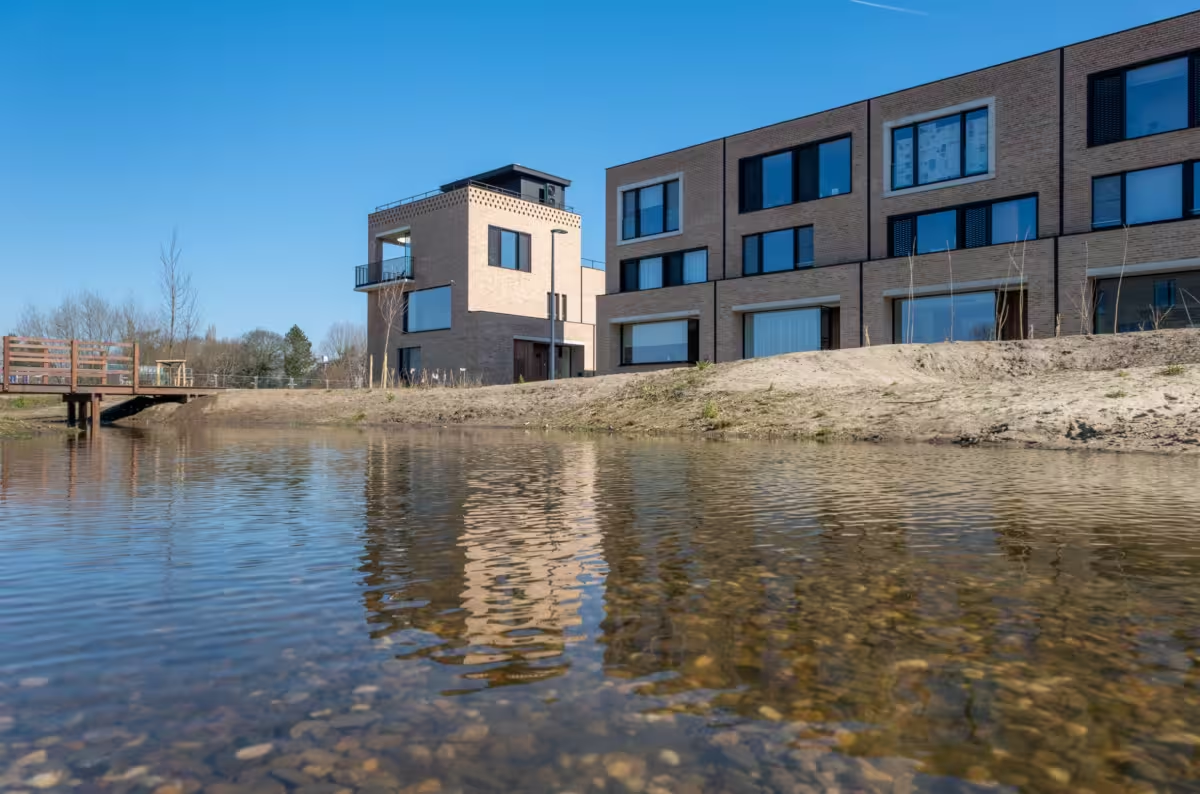
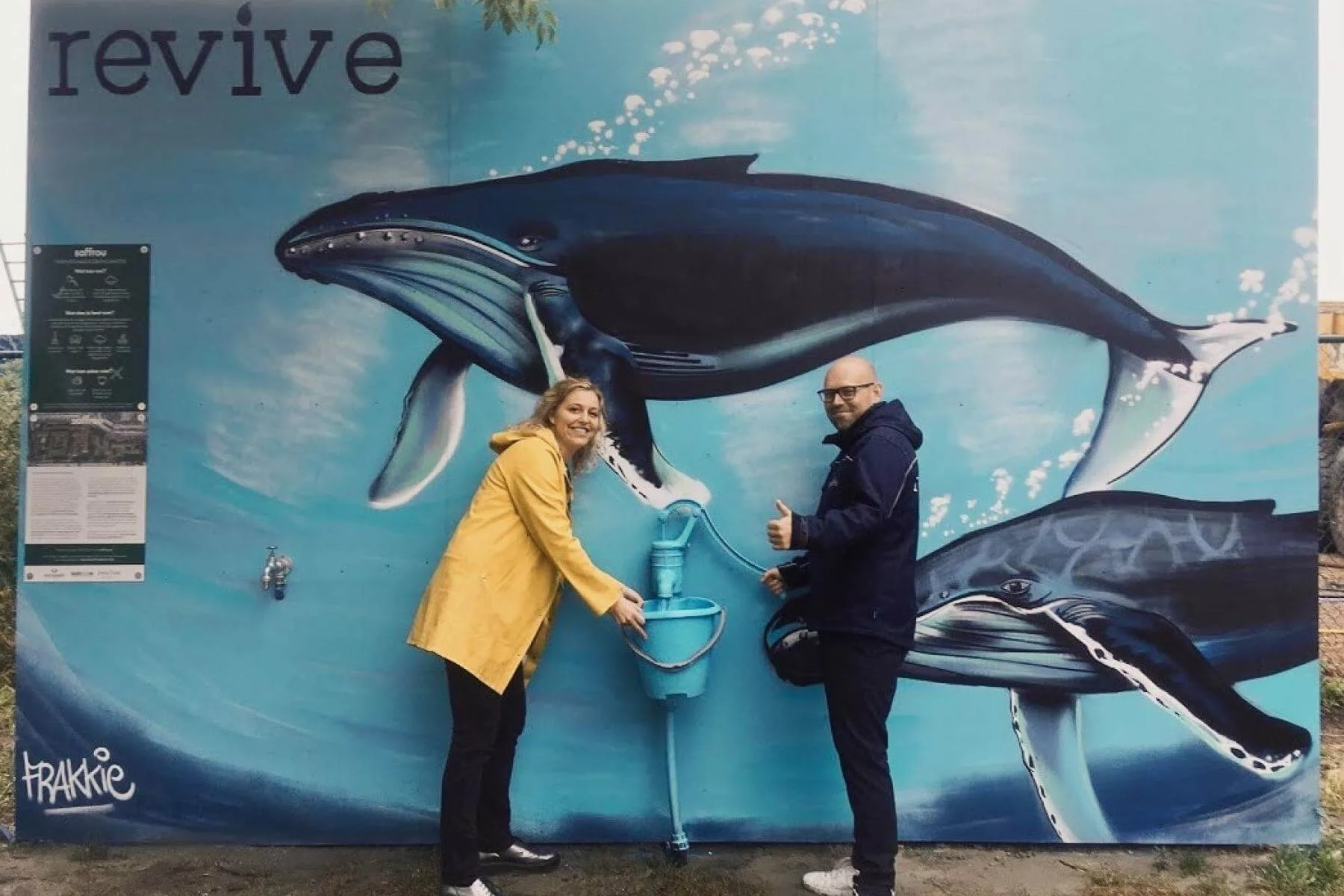
We manage water sustainably by deliberately focusing, before, during, and after construction, on reducing water consumption, maximising the reuse of available water flows, and minimising our impact on the environment. Already in the design phase, we seek solutions that structurally lower water use and optimise the collection and use of rainwater. During construction, we avoid discharging dewatering water wherever possible and prioritise recovery and reuse to reduce pressure on local groundwater. Even after project completion, we continue to implement smart water infrastructure that encourages reuse and captures and infiltrates rainwater to the fullest. In this way, we contribute to a resilient water system and help sustainably maintain groundwater levels in the region.
CO₂ reduction at every stage
As a sustainable developer, we take our responsibility in the fight against climate change seriously. That’s why we manage our projects according to ambitious CO₂ budgets that follow best practices and often exceed legal requirements. Historically, the focus was mainly on reducing operational CO₂ emissions—the emissions generated during a building’s use, such as energy for heating, cooling, and lighting. Today, we place equal emphasis on reducing embodied CO₂, which includes emissions from material production, transport, construction, and future modifications. By conducting lifecycle analyses from the design phase, maximising the use of renewable energy and energy efficiency, and renovating existing buildings wherever possible instead of demolishing them, we reduce both operational impacts and the total climate footprint over the entire lifespan of our projects.
Material recycling
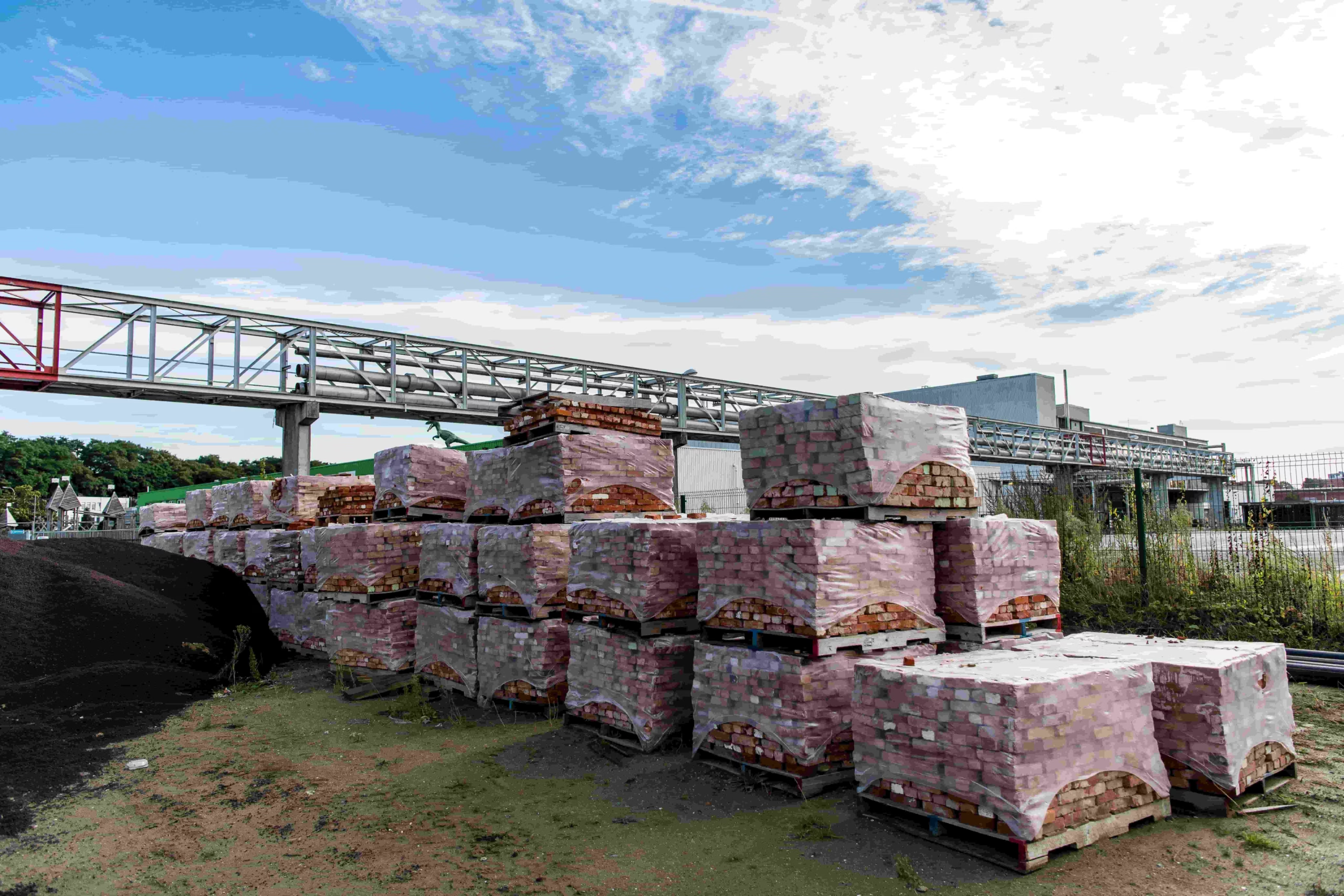
Where possible, we aim to give materials a second life, taking both environmental impact and heritage into account. For example, at the KOMET site in Mechelen, old wooden beams and cast-iron columns were carefully dismantled and repurposed as an impressive entrance to the new district, preserving the industrial heritage for the community. Reuse also played a key role in the Minerve project in Edegem. Recycled Azobe wood from old ships and structures was used for terraces and benches, while 58,000 bricks from old warehouses were reused for garden walls. Recycled rubble, in turn, serves as a drainage layer for planting. This creates a harmonious combination of sustainability, functionality, and respect for the site’s history.
Revive impact strategy
Want to learn more about our impact? How we measure it? And which parameters are important? Discover everything about our impact strategy, results since day one, our approach to responsible business, our case studies, ambitions, and more.